In Florida, you need a state license to practice acupuncture, and the law sets the age, schooling, exam and background check for it [1]. A federal health agency, NCCIH, adds what research shows about acupuncture and what to ask before you try it [2].
By the editorial team · 26 November 2026 · Sources checked November 2026
At this step
- Florida regulates acupuncture to protect the health, safety, and welfare of residents [1].
- An applicant must be at least 21, finish an approved course of study, pass an exam or national certification, and submit to background screening [1].
- Licenses are renewed every two years, and the Board can require up to 30 hours of continuing education [1][3].
- NCCIH says acupuncture may ease some chronic pain, but improper treatment or nonsterile needles can cause serious harm [2].
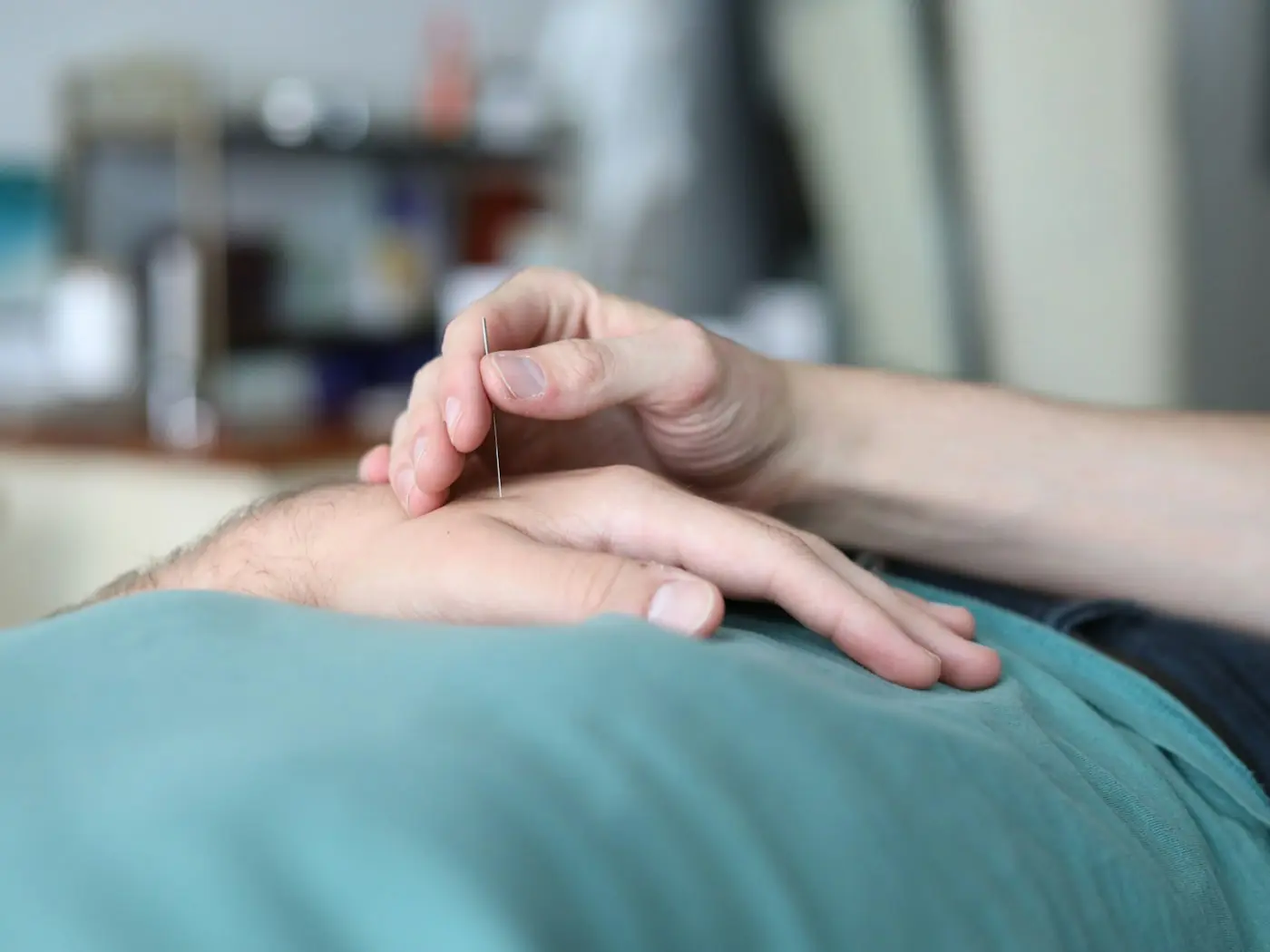
Chapter 457 makes acupuncture a regulated health profession in Florida
Florida law says public health requires regulating acupuncture. The stated goals are protecting the health, safety, and welfare of residents while keeping this healing art available to people who want it [1].
The law defines acupuncture as a form of primary health care. It is based on traditional Chinese medical concepts and modern oriental medical techniques [1]. It includes inserting acupuncture needles. It also covers add-on therapies such as electroacupuncture, Qi Gong, oriental massage, herbal therapy, and dietary guidelines, as defined by board rule [1].
An acupuncturist is a person licensed under this chapter to practice acupuncture as a primary health care provider [1]. Licensees must renew every two years to keep the right to practice [3].
The Florida acupuncture licensing rules set five requirements for applicants
You can use this list to see what a licensed acupuncturist has had to meet. An applicant must do all of the following [1].
- Be 21 or older, have good moral character, and show the ability to communicate in English by passing the national written exam in English or, if passed in another language, a nationally recognized English proficiency exam [1].
- Complete 60 college credits from an accredited postsecondary school before starting an approved course of study in acupuncture and oriental medicine [1].
- Complete that course of study. It is 3 years, and since July 31, 2001 it is 4 years, meeting standards set by the Board [1].
- Finish a board-approved national certification process, qualify through licensure by endorsement, or pass a department exam [1].
- Pay the required fees and submit to background screening [1].
A shorter path exists for people who enrolled before August 1, 1997. They needed only a 2-year course of study that met Board standards [1].
Florida acupuncture schooling must include Western science and first aid
The required course of study must meet standards the Board sets by rule. Those standards include successful completion of courses in western anatomy, western physiology, western pathology, western biomedical terminology, first aid, and cardiopulmonary resuscitation (CPR) [1].
The exam tests an applicant's competency and knowledge of acupuncture and oriental medicine. On request, oriental nomenclature for the points must be used [1]. It also includes a practical exam on diagnostic and treatment techniques and procedures [1].
The Florida Board of Acupuncture caps licensing fees by law
The Board sets fees by rule, but the statute limits how high they can go [1].
Maximum fees the Board may set for an acupuncture license Fee Cap Application $300 [1] Examination $500 plus the department's actual cost of the written and practical exams [1] Reexamination $500 plus the department's actual cost of the exams [1] Initial two-year license $400 if licensed in the first half of the two-year period, $200 if in the second half [1] Florida law says an initial application must be reviewed within 30 days. Documents sent after that review are updated within 14 business days of receipt [3].
Florida acupuncturists must renew every two years and keep learning
The Board can require up to 30 hours of continuing education every two years as a condition of renewal [1]. Courses must be in acupuncture or oriental medicine subjects. Examples include anatomy, biological sciences, sanitation and sterilization, emergency protocols, and diseases [1].
Licensees must keep their certificates of completion in their records [1]. The Board's website offers a Help Center, FAQs, and a renewal specialist for questions [3].
You can also verify a license, check an application, or file a complaint through the Board's website [3].
Florida law lists the conduct that can cost an acupuncturist a license
The statute names many grounds for denying a license or disciplining a licensee. These are the ones most relevant to patients [1].
- Advertising that claims acupuncture is useful in curing any disease, or other false or misleading advertising [1].
- Failing to keep written records that justify the course of treatment [1].
- Failing to follow Board rules on health and safety, including sterilizing needles and equipment and disposing of potentially infectious materials [1].
- Practicing beyond the scope the law permits, or taking on duties the licensee has reason to know they are not competent to perform [1].
- Using influence in the patient relationship to engage a patient in sexual activity or to exploit the patient financially [1].
- Practicing under a name other than one's own, or helping an unlicensed person practice acupuncture [1].
NCCIH reports that acupuncture may ease some chronic pain
NCCIH describes acupuncture as stimulating specific points on the body, usually with thin needles through the skin [2]. Results from a number of studies suggest it may help ease pain that is often chronic. Examples are low-back pain, neck pain, knee osteoarthritis, and carpal tunnel syndrome [2]. It may also reduce the frequency of tension headaches and help prevent migraines [2].
The picture is not one-sided. Some trials found real acupuncture and sham acupuncture equally effective, which points to a placebo effect [2].
Chinese herbal products are a different story. Many studies were of poor quality, so no firm conclusions can be made about whether they work [2]. Some products have been contaminated with heavy metals, pesticides, or drugs that were not listed on the label [2].
NCCIH advises you to talk with your health care provider before trying traditional Chinese medicine
Relatively few complications from acupuncture have been reported. Still, nonsterile needles and improper treatment have caused problems. These include infections, punctured organs, collapsed lungs, and injury to the central nervous system [2].
NCCIH names these situations where you should call your doctor before going ahead [2].
- You are considering traditional Chinese medicine at all. Discuss it with your health care providers, and do not use it to replace or delay conventional care [2].
- You have a health condition and want to use Chinese herbal products [2].
- You are pregnant or nursing, or you are thinking of using these treatments for a child [2].
Ask any practitioner about their training and experience. Most states and the District of Columbia regulate acupuncture, and most states require certification from the National Certification Commission for Acupuncture and Oriental Medicine [2]. Tell all your providers about any complementary approaches you use, so your care stays coordinated and safe [2].
If you think you may have a medical emergency in the United States, call 911 or go to the nearest emergency room.
Sources
- Statutes & Constitution :View Statutes : Online Sunshine, leg.state.fl.us
- Traditional Chinese Medicine: What You Need To Know, nccih.nih.gov
- Licensing, floridasacupuncture.gov